

Bavaria’s Long Opera Summer
Long after it has gone on summer break most everywhere else, opera persists in the southern German state until the end of July.

By the final week of July, the European opera season has begun its annual migration. Aix is over; Salzburg and Bayreuth are just gearing up. In Munich, however, curtains are still rising until the very end of the month.
For an American opera-goer, such stamina can seem almost indecent. The Metropolitan Opera’s 2025–26 season ended on June 6, nearly seven weeks ago. During the height of summer in Bavaria, however, it is still possible to travel around Germany’s largest and second-most populous state and find a full and remarkably varied operatic repertory.
Over the past four weeks, I saw seven operas in Munich, Nuremberg and Regensburg. They covered 281 years of operatic history, from Handel’s Alcina (1735) to Paul Moravec’s The Shining (2016). Wagner, Dvořák, Berg, Weber and Gottfried von Einem filled the intervening centuries. The survey was accidental, but it revealed the abundance of opera here long after most companies elsewhere had closed up shop for the summer.
The Bayerische Staatsoper, Munich’s principal opera company, occupies a special position within this landscape. Its regular season flows seamlessly into the Münchner Opernfestspiele, a six-week festival that serves as both a capstone and a concentrated display. Productions from the preceding months return alongside festival premieres and starry revivals, allowing local and visiting opera lovers to sample in a few days the range of a house that has been performing since fall.
The first of this year’s two new festival opera productions arrived on June 25 with Die Walküre, the second installment of Tobias Kratzer’s Munich Ring in progress. Siegfried and Götterdämmerung both arrive next season, and two complete cycles are planned for summer 2027. Under general music director Vladimir Jurowski, the Bayerisches Staatsorchester played superbly, producing Wagnerian weight without sacrificing clarity or momentum. Irene Roberts sang an emotionally raw, blistering Sieglinde and gave the production its most complete performance. Nicholas Brownlee’s Wotan generated heat despite some roughness, while Miina-Liisa Värelä offered a lyrical Brünnhilde whose lighter sound did not always conquer the Nationaltheater.
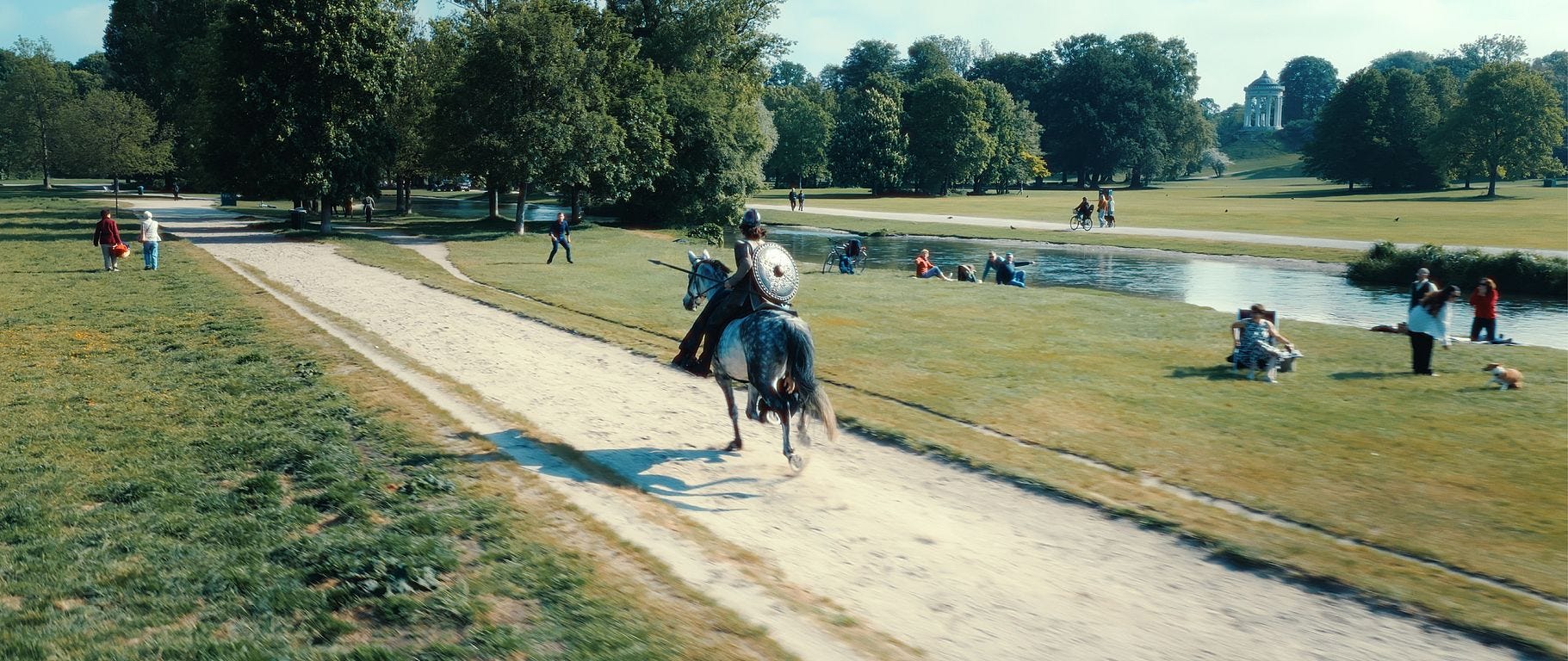
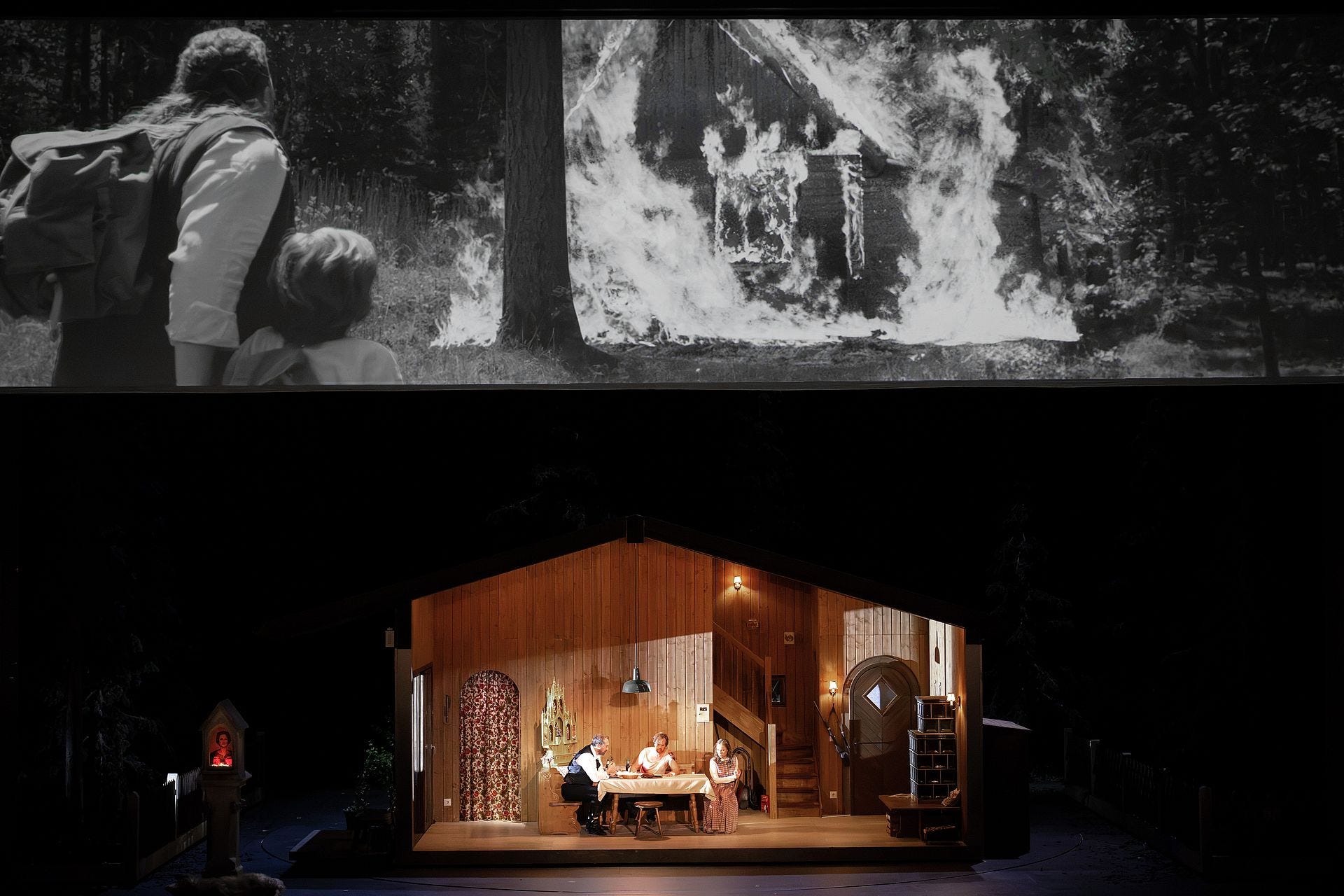
Kratzer rarely allowed the opera to stand still. Characters fidgeted and copulated awkwardly; Fricka vivisected a lamb while arguing legalistically for the sanctity of marriage. The Ride of the Valkyries became an elaborate video sequence of mounted warrior women tearing through Munich. It was giddily exciting and an undeniable crowd-pleaser. Yet the production’s ingenuity diverted attention from the intimate catastrophes at the work’s center. Its restless activity kept Wagner’s climactic recognitions and farewells from gathering their full emotional force.
Several weeks later, I took the train to Nuremberg, roughly an hour from Munich, for the final performance of Alban Berg’s unfinished masterpiece Lulu, staged by the company’s intendant, Jens-Daniel Herzog. It was the end of an ambitious season that had also included Kaija Saariaho’s Innocence, likewise staged by Herzog in what looked like a cut-rate homage to Simon Stone’s world-premiere production.
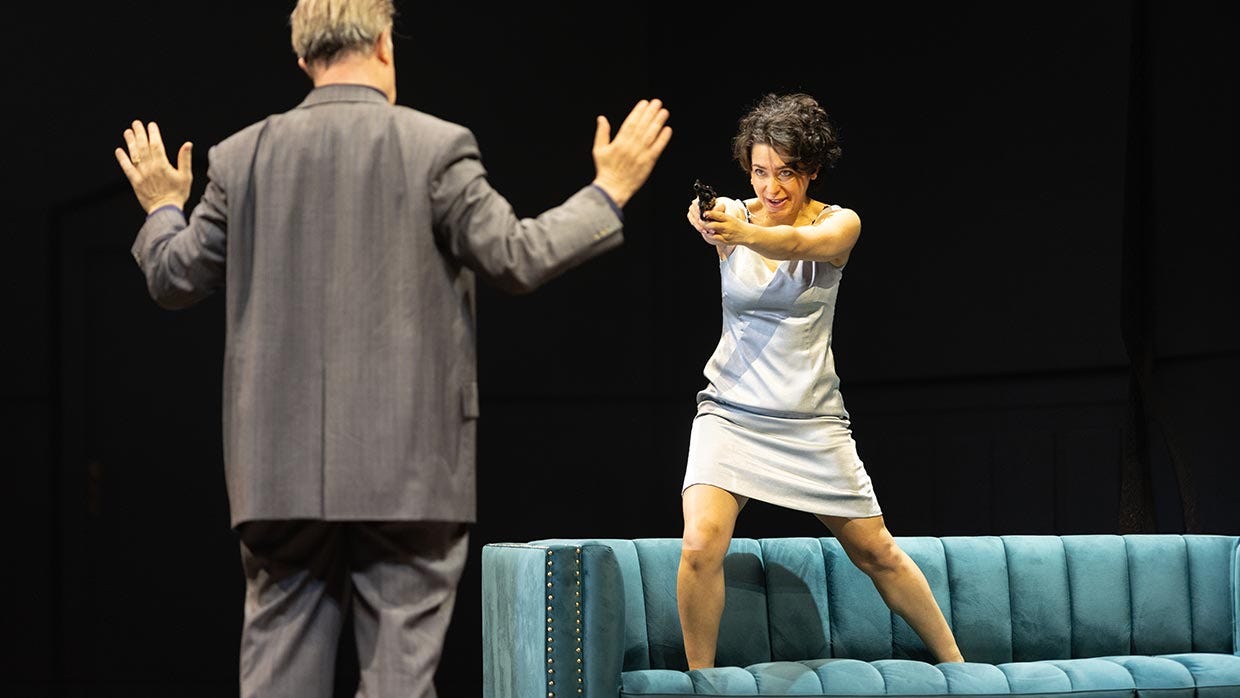
His Lulu was similarly economical but far more persuasive. Herzog kept the stage uncluttered, using a few well-chosen props and a high-gloss fashion photograph of Lulu in place of her painted portrait. The spareness ensured that the focus remained squarely on the musical and vocal performances.
The Staatsphilharmonie Nürnberg played Berg’s angular and lush score, heard in Eberhard Kloke’s alternative realization of the third act, with confidence and appetite. The young American soprano Juliana Zara triumphed in the fiendishly difficult title role. The Nuremberg performances were her first in the part since her acclaimed 2023 role debut in Darmstadt. Her bright, powerful and flexible soprano, physical fearlessness and frank eroticism lent Lulu a directness in keeping with the character’s insistence that she has never tried to be anyone other than herself.
With vocal and dramatic agility, Zara moved between cunning, desire, strength and helplessness without allowing the role to settle. With each new confrontation, her Lulu seemed to discover which version of herself the person before her required. I hope it is not too long before I hear her in this bravura role again.
Staatstheater Regensburg, home to another of Bavaria’s largest opera companies, also closed out its season with an ambitious new production: the European premiere of Paul Moravec’s The Shining, adapted from Stephen King’s novel.
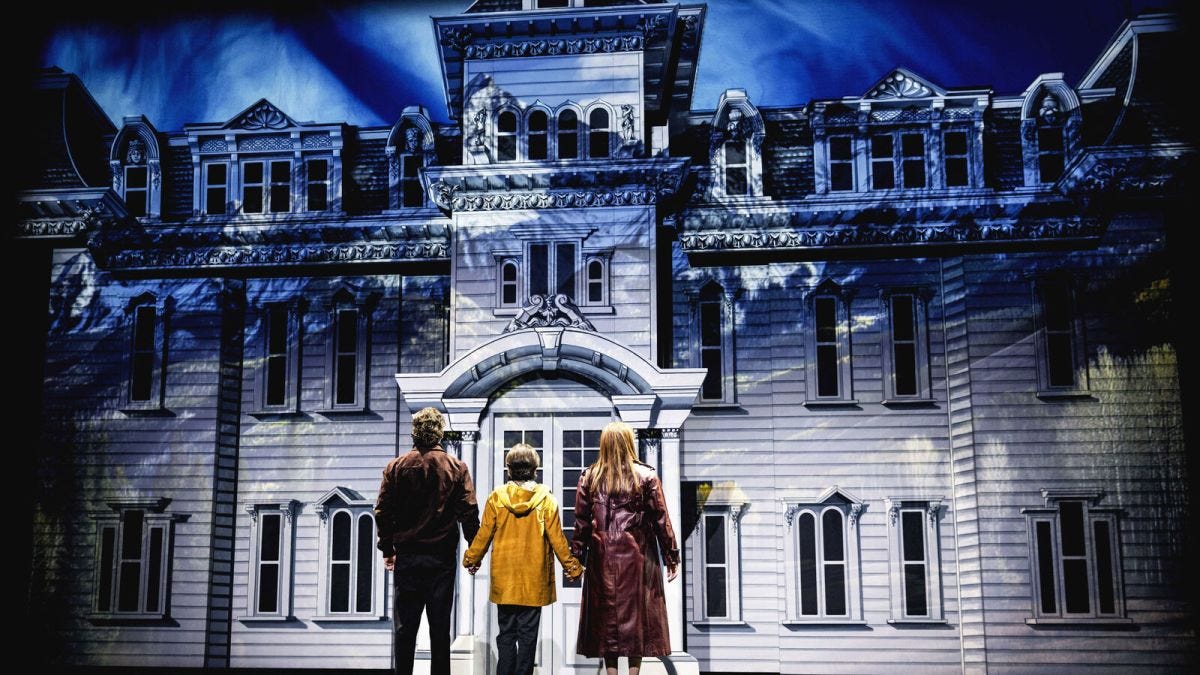
The plot will be familiar to anyone who has seen Stanley Kubrick’s 1980 horror classic, although Moravec and his librettist, Mark Campbell, hew more closely to King’s book. King famously disliked the liberties Kubrick took with the material. Moravec’s Jack Torrance, the struggling writer who accepts a winter caretaking job at a grand Colorado hotel, enters the Overlook as a recovering alcoholic trying to repair his relationship with his wife and son. His mental deterioration is a human tragedy long before malevolent spirits intrude.
Moravec writes in an accessible, richly orchestrated style, with recurring motifs, carefully shaped vocal lines and an alert sense of pacing. The music can behave like a particularly accomplished film score, providing dread and atmosphere. It is also theatrically efficient: Moravec knows how to organize scenes succinctly while giving his characters ample opportunity for emotional expression.
Sebastian Ritschel’s production understood those strengths. Sam Madwar’s flexible set and video design moved fluently through the Overlook’s bedrooms, bar, boiler room and hedges, making the hotel a highly differentiated physical environment instead of a generalized emblem of evil. Stefan Veselka and the Philharmonisches Orchester Regensburg brought sweep and tension to the score. German baritone Carl Rumstadt traced Jack’s collapse with mounting violence, while Romanian soprano Theodora Varga preserved Wendy’s dignity even when the libretto asked her chiefly to plead for her life and protect her son from his possessed father.
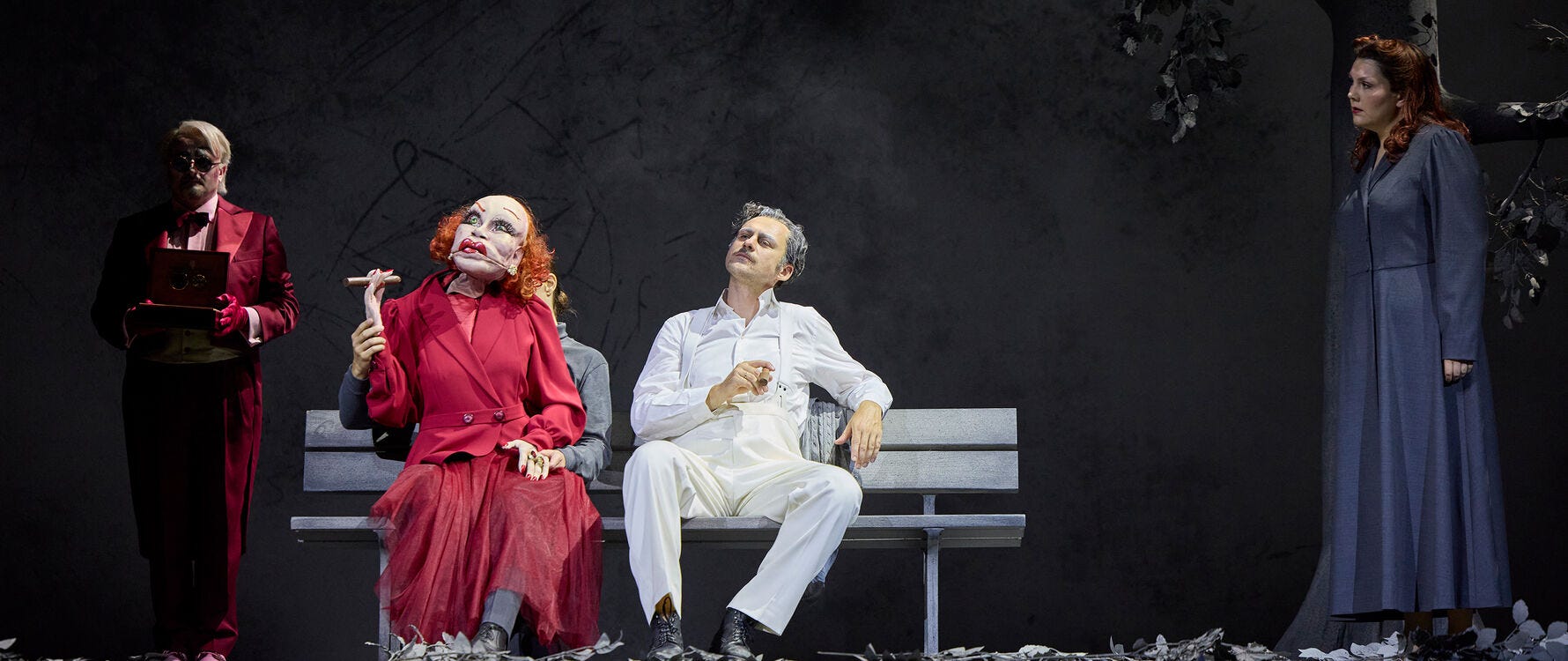
A few days later, at Munich’s Gärtnerplatztheater, Gottfried von Einem’s Der Besuch der alten Dame represented a different sort of horror. Friedrich Dürrenmatt’s 1956 tragicomedy concerns Claire Zachanassian, a wealthy woman who returns to the town that drove her away decades earlier with an indecent proposal its impoverished inhabitants cannot refuse. Claire offers them a fortune if they kill Alfred Ill, the man who impregnated and abandoned her, then bribed two witnesses to deny his paternity. The townspeople reject the bargain with righteous indignation. Soon they are purchasing expensive goods on credit, counting on money that can arrive only after Ill is dead.
Known in English as The Visit, the play was the Swiss playwright’s international breakthrough. Dürrenmatt later adapted it as the libretto for von Einem’s 1971 opera. More recently, it inspired a quirky and unsettling Kander and Ebb musical that reached Broadway in 2015 with Chita Rivera as its titular revenant, as well as a sprawling 2020 adaptation by Tony Kushner at Britain’s National Theatre whose run was cut short by the COVID-19 shutdown.
In his libretto, Dürrenmatt preserved the play’s macabre, artificial language and gallery of grotesques. Claire’s attendants bear names such as Boby, Koby, Loby, Roby and Toby, as though they had wandered out of a sinister children’s rhyme. Spoken onstage, such dialogue can land awkwardly, its exaggeration exposing the actors more readily than the society Dürrenmatt is mocking. Singing better accommodates such strangeness: opera’s native stylization allows these figures to sound at home in their distorted world.
Von Einem’s score is skillful, theatrical and gratifying to voices, although its idiom is a better match for the play’s humor than its horror. Still, the Gärtnerplatz orchestra, conducted by Michael Balke, made it sound like gripping and expressive music theater. Sophie Rennert’s Claire and Ludwig Mittelhammer’s Ill were vocally and dramatically well matched, despite the deliberate imbalance in their stations.
Impressively, the smaller roles in this rarity were filled with seasoned character singers, including Wolfgang Ablinger-Sperrhacke as the mayor, Norbert Ernst as Claire’s butler, Matija Meić as the schoolmaster and Paul Schweinester as Hofbauer. Their sharply differentiated performances allowed the citizenry of Güllen to emerge as a vivid community rather than a generalized image of provincial destitution.
The evening’s most vivid presences, however, were Claire and her black panther, embodied as puppets in Nikolaus Habjan’s production. Habjan collaborated with puppet designer Soffi Povo, who built the figures. Rennert sang beside the wizened puppet of Zachanassian. In the play, Claire describes the accidents that have left much of her body prosthetic; the puppet made that artificiality visible by showing us a woman whom money and injury have transformed into a machine built for revenge.
With their bloated, bulbous features, the figures brought rotting Muppets to mind. That unsettling combination of cartoonishness and decay provided an effective visual analogue to Dürrenmatt’s play. Beyond the puppets, however, Habjan’s staging was as stodgy and drab as a high-school production of Our Town. There was rarely enough sinister wit or sense of danger onstage to show how decent townspeople come to regard murder as a civic duty.
After watching a modern European community reason its way toward collective murder, I was transported, via Handel and Ariosto, to a mythic realm where danger announces itself as enchantment. Across town, Alcina, the Opernfestspiele’s second opera premiere, lit up the Prinzregententheater. This 1901 theater, modeled on Bayreuth’s Festspielhaus and prized for its clear acoustics, has become a regular home for the Staatsoper’s summer Baroque productions.
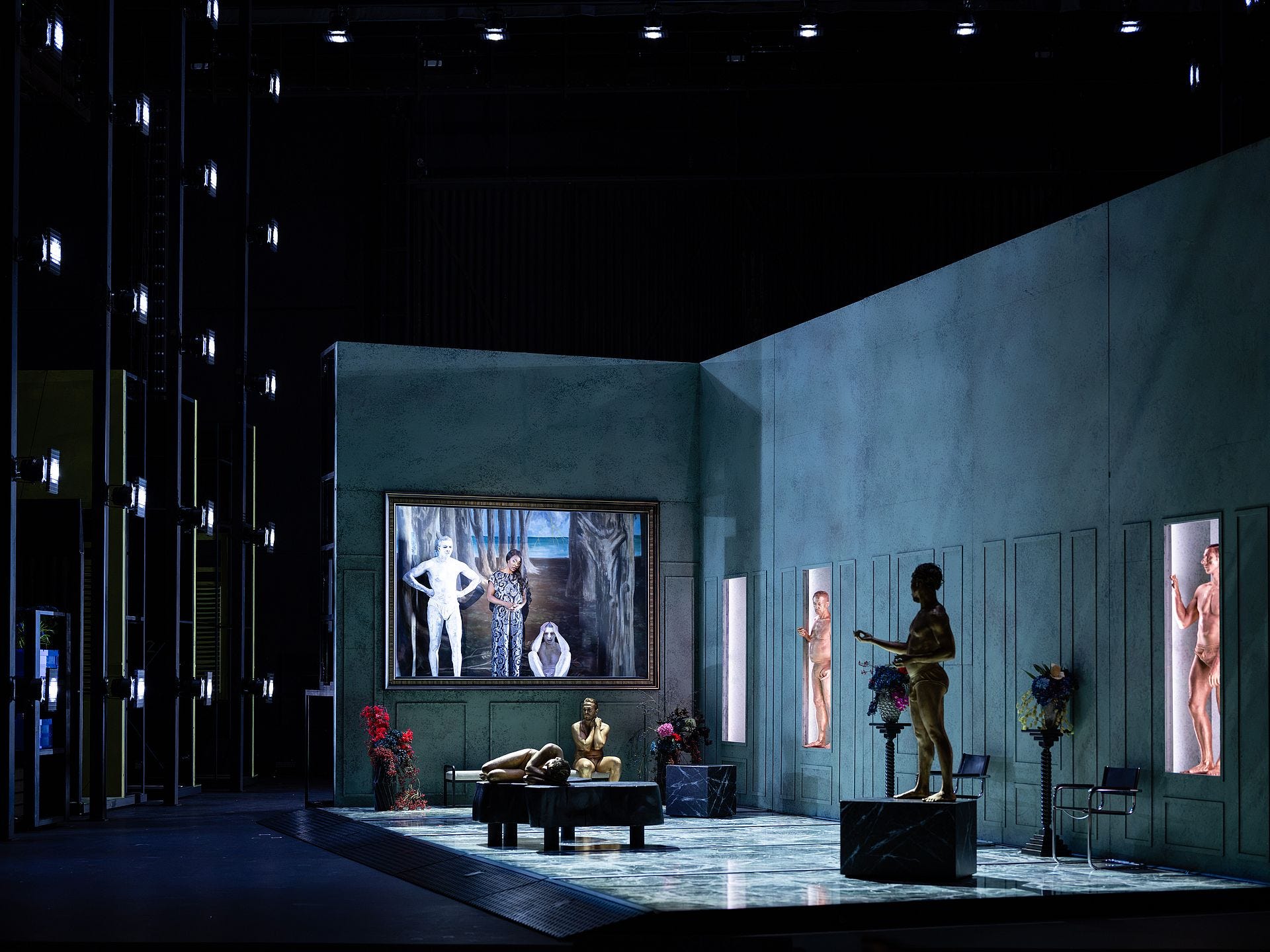
Members of the Bayerisches Staatsorchester played with extraordinary buoyancy and refinement under Stefano Montanari. Rhythms sprang into life without becoming brittle; slower passages unfolded in long, suspended breaths. The cast was exceptional, with Jeanine De Bique’s Alcina and John Holiday’s Ruggiero dominating an evening of superb Baroque singing. Aria after aria unfolded in phrases that could be melting, arch, aching, plaintive or muscular as required.
De Bique, who triumphed last season as Télaïre in Peter Sellars’s production of Castor et Pollux at the Palais Garnier, conducted by Teodor Currentzis, held Alcina’s glamour and desperation within the same vocal line, allowing the sorceress’s authority to crumble gradually into loneliness. Holiday, who made a phenomenal impression last season in Barrie Kosky’s Berlin production of Akhnaten, sang with ease, beauty and emotional openness, finding a tenderness in Ruggiero that made his awakening from enchantment unusually affecting. Their finely shaded performances allowed Handel’s succession of arias to accumulate into a psychological drama that the arid production rarely supplied.
Johanna Wehner’s staging was too static and nondescript for such volatile music. Its first half offered handsome surfaces without establishing a compelling theatrical world. After intermission, however, the figures inhabiting Alcina’s island appeared as living statues, beautiful objects into which her discarded lovers had been transformed. The image brought the staging into focus. What had seemed decorative acquired a disturbing emotional logic, and the second half became increasingly beautiful and moving, even if Wehner seemed primarily concerned with polished surfaces.
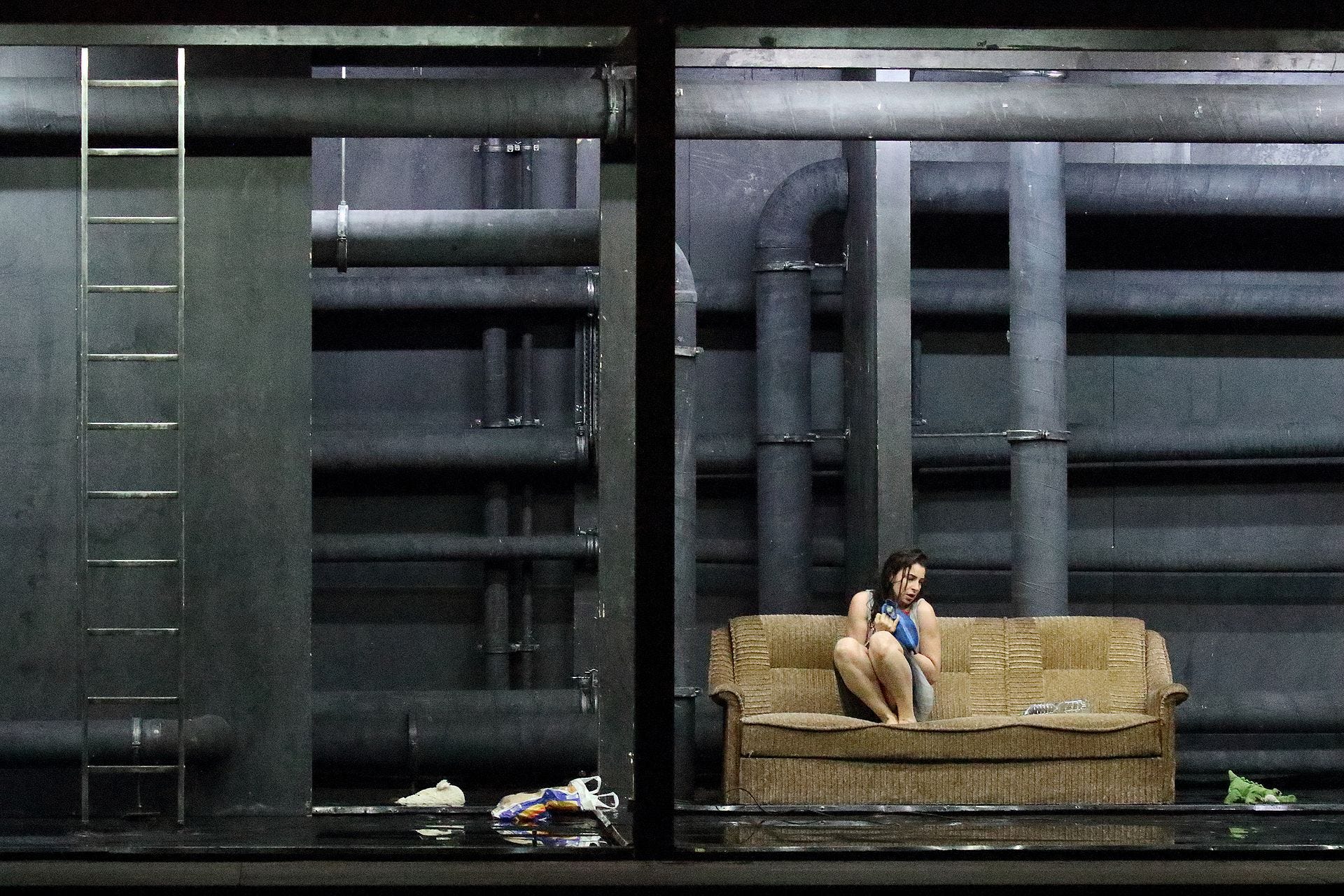
Enchantment and suspension between worlds also stood at the center of the sixth opera in my Bavarian summer binge. Martin Kušej’s 2010 production of Rusalka removes Dvořák’s fairy tale from its watery landscape and relocates it to a dank basement. In the Austrian director’s staging, Vodník, the water spirit who serves as Rusalka’s father figure and protector in the opera, keeps her and the other water nymphs imprisoned there. The abuse she suffers in the cellar sets the terms for everything that follows in the world above. Her voicelessness, estrangement, hospitalization and fatal reunion with the Prince become consequences of captivity.
The staging concept sounds blunt and even tasteless, but its images retain their power sixteen years after the production’s premiere. Set designer Martin Zehetgruber’s ultra-wide, pipe-filled cellar, accessible by a long ladder, is leaky, dark and airless. When the Gamekeeper and Kitchen Boy discover the prisoners, they summon the police, who raid the basement and arrest Vodník. Rusalka and the other victims are transferred to a psychiatric clinic.
In the final scene, the police escort Vodník, in irons, to visit Rusalka in the psychiatric ward. When the Prince arrives, she kills him. Kušej has turned Dvořák’s fatal kiss into the recurrence of trauma: for Rusalka, intimacy and violence have become inseparable.
Malin Byström’s Rusalka sometimes seemed to tear loose from the musical framework around her. She was not always exact, but the freedom of her phrasing gave the character a volatile intensity. Jamie Barton relished Ježibaba’s blood-curdling low notes, finding the right measure of menace and camp. Christof Fischesser’s Vodník was perhaps the evening’s most complete performance, vocally commanding and dramatically disturbing without reducing the character to a stock monster.
Pavel Černoch’s Prince sounded expressive but underpowered through much of the evening, as though he were preserving his resources. In the final scene, the voice finally opened, acquiring the lyrical urgency and ravaged despair that had been missing earlier.
The revival’s principal attraction was the young Czech maestro Petr Popelka, who will become the Bayerische Staatsoper’s general music director in the 2029–30 season. Rusalka is a score he plainly knows intimately, and he conducted it with phenomenal urgency, refinement and intelligence. Instrumental details emerged without disrupting the dramatic line; every shift of color or pulse seemed responsive to the action.
Munich will require far more of him in the future. A general music director at one of the world’s great repertory houses must move persuasively through Mozart, Wagner, Strauss, Italian opera, 20th-century works and new scores. One superb Rusalka cannot answer every question. It did reveal the sensitivity, alertness and dramatic instinct that Popelka can bring.
Four nights later, on July 29, I returned to the Nationaltheater for a nearly sold-out revival of Dmitri Tcherniakov’s 2021 staging of Der Freischütz. I remembered the production more fondly than it deserved, perhaps because I first encountered it amid the strange euphoria of live opera during the pandemic. Seen again, its anonymous corporate world—Kuno as a predatory executive, Max and Kaspar as employees competing for advancement—proved dramatically inert, stripping Weber’s supernatural tale of mystery without finding much of interest beneath it.
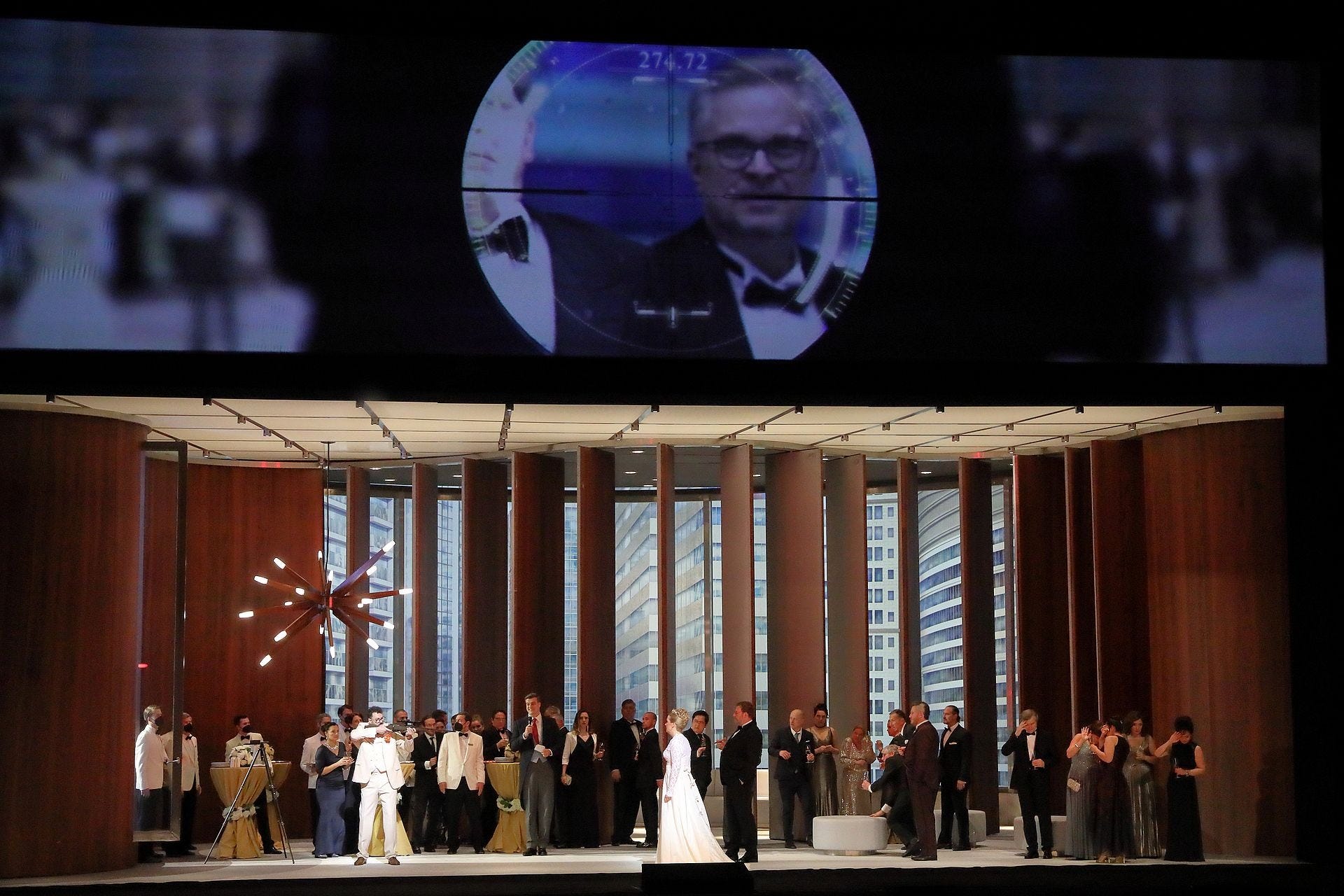
The production’s principal visual enticement is its monumental, stage-spanning set: a luxurious, oak-paneled corporate office. The elaborate backstories Tcherniakov invents for Weber’s characters, however, feel arbitrary and reveal little about the opera. The production drew scattered boos at the curtain call, an unusual response to a five-year-old revival, though hardly an inexplicable one.
Thankfully, the musical performance redeemed the evening. Bálint Szabó gave Kuno dark, solid authority. Kyle Ketelsen’s muscular bass-baritone suited Kaspar, reimagined here as a former soldier with PTSD; his doubling as Samiel made complete dramatic sense and lent Weber’s demonic presence a pained ambiguity.
Stanislas de Barbeyrac, who triumphed last season as a ravaged Siegmund in Barrie Kosky’s London Die Walküre, brought Max an unusually handsome, refined tenor, with enough wildness at its edge to suggest a man coming apart. Golda Schultz, who also sang Agathe at the premiere, now sounded freer and more luminous than ever, her legato effortless and her soft singing almost melting.
Daniele Rustioni, the Staatsoper’s principal guest conductor from 2021 to 2023 and now principal guest conductor at the Met, plainly retained his rapport with the Bayerisches Staatsorchester. At the curtain call, he raised its players section by section, visibly delighted by what they had accomplished. After ten months of opera and six weeks of festival performances, the orchestra still sounded as though the season had only just begun.